

Expect a basic vulnerability assessment to cost a few thousand dollars for a small business, while mid-market engagements with verified findings typically cost more, and enterprise programs with manual validation and compliance reporting can become significantly more expensive. The biggest swing factor is scope: how many assets you have, how deep the testing goes, and whether a human verifies the results. A scoped quote tells you more than any average ever will.
TL;DR:
- Costs vary significantly based on scope, with small businesses paying a few thousand dollars for basic automated scans, while enterprise programs can reach tens of thousands for thorough validation and compliance.
- Asset count, testing depth, and compliance requirements are the main factors influencing pricing, with manual verification and remediation support considerably increasing the overall cost.
- Pricing models differ from per-host or per-scan options to flat project fees or ongoing subscriptions, each offering different predictability and flexibility.
- Reports should include verified findings, risk ratings tied to business impact, remediation plans, and evidence artifacts to ensure usefulness and compliance.
- External costs like licensing, internal labor, retesting, and emergency fixes often cause total expenses to surpass the vendor’s initial quote.
Table of Contents
- Average vulnerability assessment cost ranges by business size
- What factors influence vulnerability assessment pricing?
- Common pricing models for vulnerability scans
- What should be included in a vulnerability assessment report?
- Hidden costs beyond the vendor’s quoted fee
- How to choose a vulnerability assessment provider
- How we think about pricing transparency
- Get a scoped vulnerability assessment quote
- FAQ
- Sources
Average vulnerability assessment cost ranges by business size
Most quotes fall into three bands, and knowing which one fits your environment helps you set a realistic number before you ever talk to a vendor.
Small businesses with a handful of servers, a basic network, and a few dozen endpoints typically pay on the lower end. These engagements usually cover automated scanning of external and internal IP addresses, a summary report, and basic remediation guidance. Turnaround is often a few days to a week.
Mid-market organizations, generally those with 50 to 500 employees, cloud workloads, and multiple office locations, pay more because the scope grows and vendors add manual verification to cut down on false positives. These engagements often take one to three weeks and include a prioritized remediation plan tied to business risk rather than just a raw vulnerability list.
Enterprise engagements climb sharply because of scale, the need for exploit validation on critical findings, and compliance reporting requirements that demand documented evidence. CISA’s vulnerability management guidance notes that budget and scope directly determine what capabilities an organization can realistically adopt, which is why enterprise clients often fund dedicated managed scanning programs rather than one-off assessments.
- Entry-level: automated scanning, basic reporting, days to a week.
- Mid-market: authenticated scans, manual verification, one to three weeks.
- Enterprise: full validation, compliance mapping, several weeks to months.
What factors influence vulnerability assessment pricing?
Your quote is really a reflection of five decisions you control, directly or indirectly.
Asset count and type matter first. A flat network of 50 IP addresses costs far less to assess than an environment mixing on-premises servers, cloud workloads across multiple providers, web applications, and operational technology. Each asset type often needs different tooling and expertise.
Depth of testing is the second lever. An unauthenticated scan checks what an outsider could see without credentials. An authenticated scan logs in and checks for misconfigurations and missing patches from the inside, which costs more but finds more. Manual verification and exploit validation, where a tester confirms a vulnerability is actually exploitable rather than a false alarm, adds the most cost because it requires skilled labor instead of just running software. NIST IR 8011-4 found that automation reduces assessment cost compared with fully manual methods, but verification still requires people who know what they are looking at.
Compliance requirements add another layer. If you need HIPAA, PCI, or a federal framework like CMMC satisfied, your vendor has to produce specific documentation and evidence artifacts, which takes more hours than a general health check.
Finally, access constraints and remediation support shape the final number. Limited scanning windows, change-control approval delays, and a request for hands-on remediation help all push the price up.
- Asset scope: more IPs, cloud accounts, and apps mean more hours.
- Testing depth: authenticated and manually verified scans cost more than basic automated ones.
- Compliance needs: HIPAA, PCI, or federal frameworks require formal evidence and reporting.
- Remediation support: vendors who help fix issues charge more than those who just report them.
Pro Tip: Ask every vendor to quote authenticated scanning separately from unauthenticated, since the gap in both price and value is usually substantial.
Common pricing models for vulnerability scans
Vendors structure fees differently, and the model you pick affects how predictable your budget is from quarter to quarter.
Per-scan or per-IP pricing charges you based on the number of hosts tested. It is easy to understand but can spike unexpectedly if your asset count grows mid-year. A federal pricing example from the Networx Vulnerability Scanning Service guide shows this pattern clearly: usage-based scan blocks alongside unlimited-scan monthly options, split into separate setup and recurring charges.
Subscription or managed-service retainers bundle ongoing scanning into a flat monthly fee, which smooths your budget and keeps coverage continuous rather than a once-a-year snapshot.
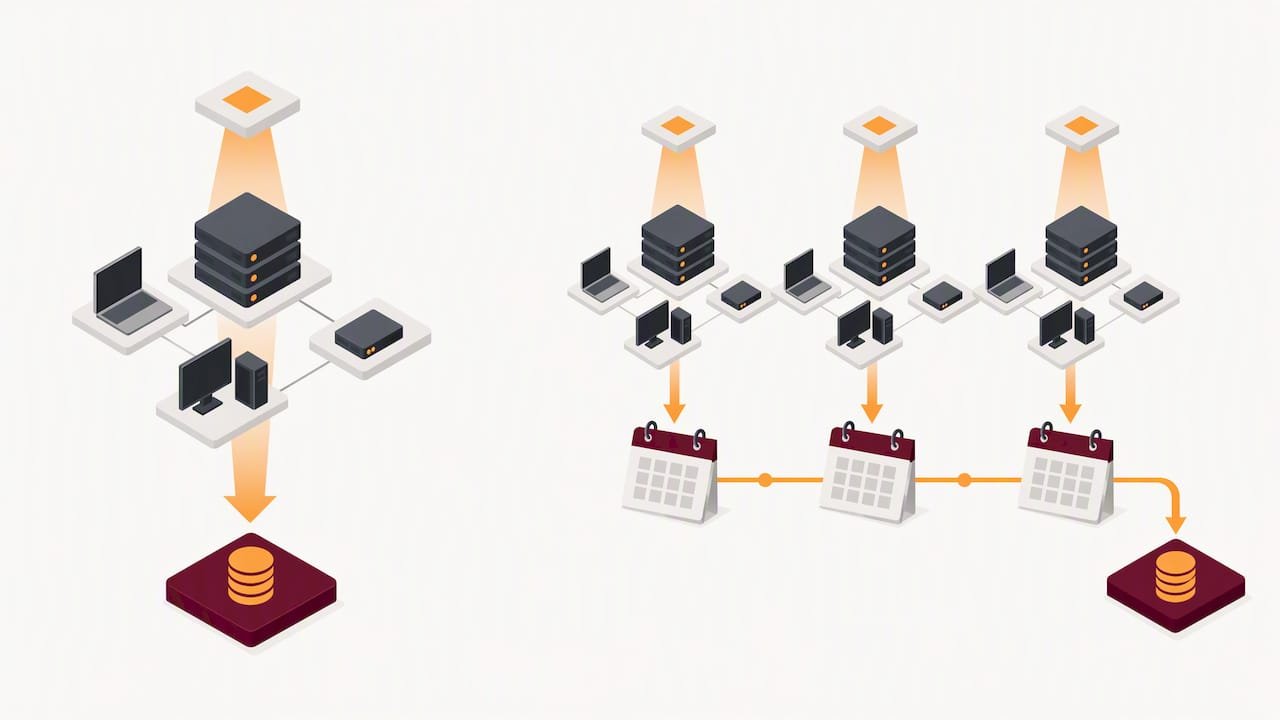
Flat-fee scoped engagements quote a single price for a defined project, which gives you clarity on cost but can trigger change orders if your environment turns out to be larger or messier than the vendor assumed.
Hybrid models combine a scanning tool license with professional-services hours for verification and reporting, which works well for organizations that want some control over tooling but still need expert eyes on the results.
- Per-scan or per-host: predictable per unit, risky if your asset count grows.
- Subscription retainer: steady monthly budget, continuous coverage.
- Flat-fee project: clear upfront price, watch for change-order clauses.
- Hybrid (license plus services): balances cost control with expert verification.
What should be included in a vulnerability assessment report?
A vulnerability assessment is only as useful as what lands in your inbox at the end, so your proposal should spell out exactly what you will receive.
- Verified findings, not just raw scan output. Insist on false-positive reduction so your team isn’t chasing phantom issues.
- Risk ratings tied to business impact. A critical vulnerability on an internet-facing server should be flagged differently than the same flaw on an isolated test machine.
- An executive summary written for leadership, separate from the technical appendix your IT team will actually work from.
- A prioritized remediation plan, not a dump of every CVE found.
- Remediation assistance and a retest policy, so you know whether fixes get verified after you apply them.
- Evidence artifacts that satisfy your compliance framework’s documentation requirements, if that applies to you.
Our vulnerability analysis service builds every one of these into the deliverable rather than treating them as optional add-ons.
Hidden costs beyond the vendor’s quoted fee
The number on your invoice is rarely the number you actually spend. Several costs sit outside the vendor’s line item and still hit your budget.
Scanner licenses and tooling fees apply if you run any scanning in-house between vendor engagements. Vendor professional-services hours climb fast once manual verification enters the scope, and GSA contractor rate sheets show hourly rates for cybersecurity specialists that illustrate how quickly labor adds up on top of a base assessment fee.
Internal remediation labor is the piece most budgets miss entirely. Your own IT staff still has to patch systems, update configurations, and push changes through approval processes, and that time has a real cost even if no invoice shows it.
Remediation costs often exceed the original assessment fee, which is why CISA’s guidance recommends treating budget and scope as the two factors that define what your program can realistically accomplish, and planning a separate remediation reserve rather than assuming the assessment fee covers the full cost of getting secure.
- Scanner licenses: ongoing cost if you scan between engagements.
- Professional-services hours: climb with manual verification work.
- Internal remediation labor: patching and change control take staff time.
- Retesting fees: confirming fixes worked is often billed separately.
- Downtime windows: emergency patches can interrupt operations.
A modestly priced assessment can easily become significantly more costly once internal labor, retesting, and emergency patching are accounted for.
How to choose a vulnerability assessment provider
Use this checklist directly in vendor calls or RFPs. It covers the questions that separate a solid proposal from a vague one.
- Ask for a defined scope list. Request the exact IP ranges, cloud accounts, and applications included before you compare price.
- Confirm verification practices. Ask whether findings are manually validated or purely automated output.
- Request a sample report. A real example tells you more than any sales pitch about report quality.
- Clarify remediation support. Find out if retesting is included or billed as a separate line item.
- Check data handling practices. Ask where scan data is stored and who has access to it.
- Ask about SLAs. Confirm turnaround time for the final report and for any emergency findings discovered mid-scan.
- Decide between recurring and one-off. If your environment changes often or you operate in a regulated industry, a managed cybersecurity retainer usually beats a single annual snapshot.
Red flags worth walking away from: a quote with no defined asset count, a report sample that is just a raw scanner export, or a vendor who can’t answer how they distinguish a real finding from a false positive.
Pro Tip: If a proposal doesn’t mention a retest policy, ask for one in writing before signing, since unverified remediation is the most common gap in vulnerability programs.
How we think about pricing transparency
Alden has spent years helping SMBs translate vendor quotes into real budget decisions, and the pattern repeats: the cheapest bid rarely includes remediation support, and the most expensive one isn’t always the most thorough. We built our own vulnerability analysis process around clear, itemized quotes so you know exactly what you’re paying for before work starts.
— Alden
Get a scoped vulnerability assessment quote
We offer vulnerability analysis, penetration testing, vCSO leadership, and managed cybersecurity services, all with transparent, all-inclusive pricing instead of a bare-bones quote that leaves remediation out. A scoped quote from us includes a sample deliverable, clear pricing options, and a remediation path built in from day one.
If you want a straight answer on what your environment would actually cost to assess, reach out through our qualification form and we’ll walk you through it.
FAQ
What is included in a vulnerability assessment?
A standard vulnerability assessment includes automated or authenticated scanning, a list of identified weaknesses, risk ratings, and a report summarizing findings for both leadership and technical teams. Stronger assessments add manual verification to reduce false positives and a prioritized remediation plan.
How much does Vulscan cost per month?
Pricing for scanning tools and services like Vulscan is not published consistently across vendors and depends on the number of assets scanned and the features included. Request a scoped quote directly rather than relying on a listed rate, since unit counts and included features vary widely between providers.
How much does a security risk assessment typically cost?
A security risk assessment often costs more than a basic vulnerability scan because it evaluates policies, procedures, and business risk alongside technical findings, not just technical vulnerabilities. Pricing depends heavily on organization size and the compliance frameworks involved, so a scoped quote is the most reliable way to get an accurate number.
How much does a Nessus scan cost?
Nessus is a scanning tool, and its licensing cost is separate from the labor cost of running and interpreting a full vulnerability assessment. The tool itself has published tiers from its vendor, but the total cost of an assessment using it depends on who runs it, how the results are verified, and what reporting is produced.
Sources
- CRR Supplemental Resource Guide, Volume 4: Vulnerability Management
- Automation Support for Security Control Assessments: Software Vulnerability Management (NIST IR 8011-4)
- Networx Unit Pricer: Service Guides: Vulnerability Scanning Service (VSS)